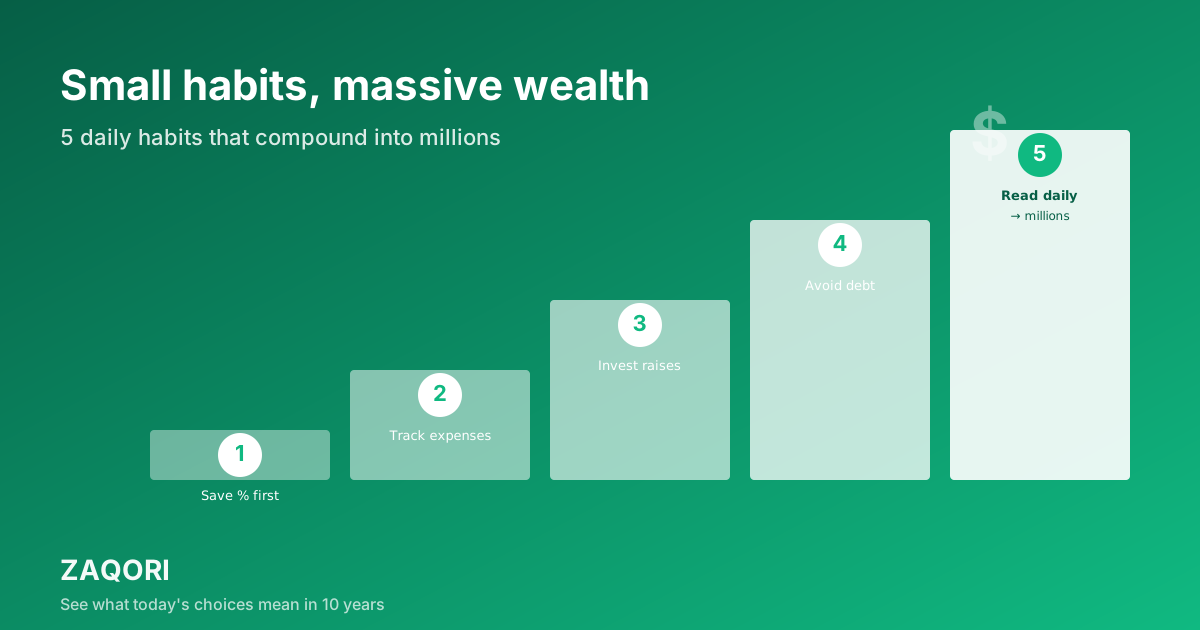
Wealth is rarely built in dramatic moments. It is almost never the result of a single brilliant investment, a lucky break, or a sudden inheritance. The most reliable path to significant wealth is the consistent application of small habits, repeated over years, that compound quietly in the background. This article identifies the specific daily and weekly habits that, when combined, create most of the wealth held by people who built it themselves.
The Five Wealth Habits That Matter
After studying the financial habits of the self-made wealthy for two decades, researchers consistently identify the same small daily behaviors. They are not glamorous. They are not exciting. They are not even particularly difficult. They are simply reliable, repeatable, and compounding. The Habit Builder Simulator helps you design a daily routine that includes all five.
Habit 1: Save a fixed percentage of every dollar, before you spend anything. Pay yourself first. Most wealth builders save 20% or more of gross income. The percentage matters less than the consistency. The most important number is not the amount, it is the rate. Habit 2: Track every expense for at least the first 90 days. Awareness changes behavior. People who track spending consistently spend 15-25% less than people who do not, even without making any other changes. Habit 3: Invest the difference every time you get a raise. Lifestyle inflation is the silent killer of wealth building. People who saved 10% on a $50,000 salary but now save 10% on an $80,000 salary are losing more money than they ever saved. The Future Wealth Simulator shows what consistent percentage-of-income saving delivers over a career. Habit 4: Avoid consumer debt entirely. A car loan, credit card debt, or "buy now pay later" balances are all wealth destroyers. The interest compounds against you. Avoiding consumer debt is one of the highest-return financial decisions most people will ever make. Habit 5: Read or learn one hour per day about money, business, or investing. Knowledge compounds. People who read 30 minutes a day about personal finance outperform people who do not by every measure, including net worth, income, and career trajectory. The Reading Progress Simulator shows what daily learning adds up to over years.Why Small Habits Win
Large financial decisions feel like they should matter most. Choosing the right career, picking the right investments, getting the right raise — these are visible, memorable, and important. But research from Duke University found that daily habits account for roughly 40% of our behavior, while one-time decisions account for far less than we imagine.
In financial terms, the daily decision to skip the $7 latte and invest it instead is worth more, over a working lifetime, than the one-time decision to change jobs. The reason is simple: the latte decision happens 250+ times a year. The job change happens once. Frequency beats magnitude. The Savings Growth Simulator shows what daily savings add up to over 30 years.
The Compound Effect In Daily Life
Compound interest is the headline concept, but compound habits are the operating reality. A daily walk does not just improve your health today. It improves your health every year for the next 30 years, and the compounding effect on energy, longevity, and medical costs is enormous. The Fitness Progress Simulator shows what daily exercise becomes over a decade.
A daily 30 minutes of focused work, repeated for 5 years, is roughly 1,800 hours of deliberate practice. That is enough to reach expert level in most skills. A daily 10 minutes of journaling, repeated for a year, is enough to clarify your goals and dramatically improve decision-making. A daily check of your investments, repeated for decades, is enough to consistently outperform the average investor.
The scale of small habits becomes visible only in retrospect. That is why so few people do them. The benefit is invisible in the moment. It is only visible in year 5, year 10, year 20. By then, the habit-builders are light-years ahead.
The Three Layers Of Wealth Habits
There are three layers to building wealth through habits. The first layer is income habits: how you earn money. This includes the daily work habits that build your career, the weekly learning habits that build expertise, and the monthly networking habits that build relationships. Most high earners got there by being slightly above average in income-building habits for a very long time.
The second layer is spending habits: how you deploy money. This includes the daily choice of needs vs wants, the weekly check on subscriptions and recurring costs, the monthly review of your budget, and the quarterly review of your major expenses. The richest 10% of households spend 40% less per year than middle-class households on a per-capita basis, according to Bureau of Labor Statistics data. Spending less is not a sacrifice. It is a habit.
The third layer is investing habits: how you put money to work. This includes the automatic monthly investment, the quarterly rebalancing check, the annual tax planning review, and the constant learning about better investment strategies. The Investment Growth Simulator shows what consistent monthly investing delivers over decades.
The Habit Stack That Works
Most successful wealth-builders stack these habits together. A morning routine might include 20 minutes of reading, 30 minutes of focused work, and 5 minutes of investment check. An evening routine might include 10 minutes of expense tracking and 15 minutes of planning tomorrow's priorities. The total time investment is under 90 minutes a day, and the financial return is millions of dollars over a career.
The exact routine matters less than the consistency. The Decision Outcome Simulator shows the long-term impact of choosing to invest that 90 minutes vs scrolling. The 30-year difference, in both wealth and other life outcomes, is staggering.
What To Do This Week
Pick one wealth habit from the list above. Just one. Do it every day for 30 days. After 30 days, add a second. After 90 days, you will have three wealth habits that are nearly automatic. After a year, you will be in the top 10% of savers. After a decade, you will be in a financial position that most people only dream about.
The most expensive moment is the one where you decide "I will start next month." Every month you delay is a month of compounding you can never recover. Start tonight with one habit. Use the Habit Builder Simulator to design your stack.
Frequently Asked Questions
Do I really need all five habits?
No. Start with one or two. The first habit is "save a fixed percentage before spending." That single habit, if done for 30 years, creates most of the wealth.
What if my income is too low to save 20%?
Save what you can. Even 5% is a habit worth building. The rate matters less than the consistency. The percentage can grow with your income.
How long until I see results?
You will see results in your bank account in 30 days. You will see compounding results in 3-5 years. You will see transformative results in 10-20 years.
Is it really that simple?
It is simple. It is not easy. The challenge is not understanding the math. The challenge is doing the boring thing consistently for decades while other people spend their money on things that do not matter.
What is the highest-leverage habit?
The most leveraged habit is "invest the difference every time you get a raise." It combines increasing income, automatic saving, and the lifestyle inflation guardrail into one rule.
What if I fail a day?
That is fine. The point is to never fail two days in a row. The slip is the data. The recovery is the habit.
The Takeaway
Wealth is a habit, not an event. Every wealthy person you have ever met got there through thousands of small, consistent decisions, repeated for years. The most surprising thing about the wealth habits above is that none of them are difficult. They are simply not done by most people. That is the opportunity. See what your own wealth habit stack would deliver at the Future Wealth Simulator.